Challenges
Datasets
Workspaces
Papers
Discussions
Leaderboard
Log inSign up
Challenges
Datasets
Workspaces
Papers
Discussions
Leaderboard
Blog
Job Board
Q3AS

© 2026 Aqora Quantum S.A.S.

TermsPrivacyLegal Notice
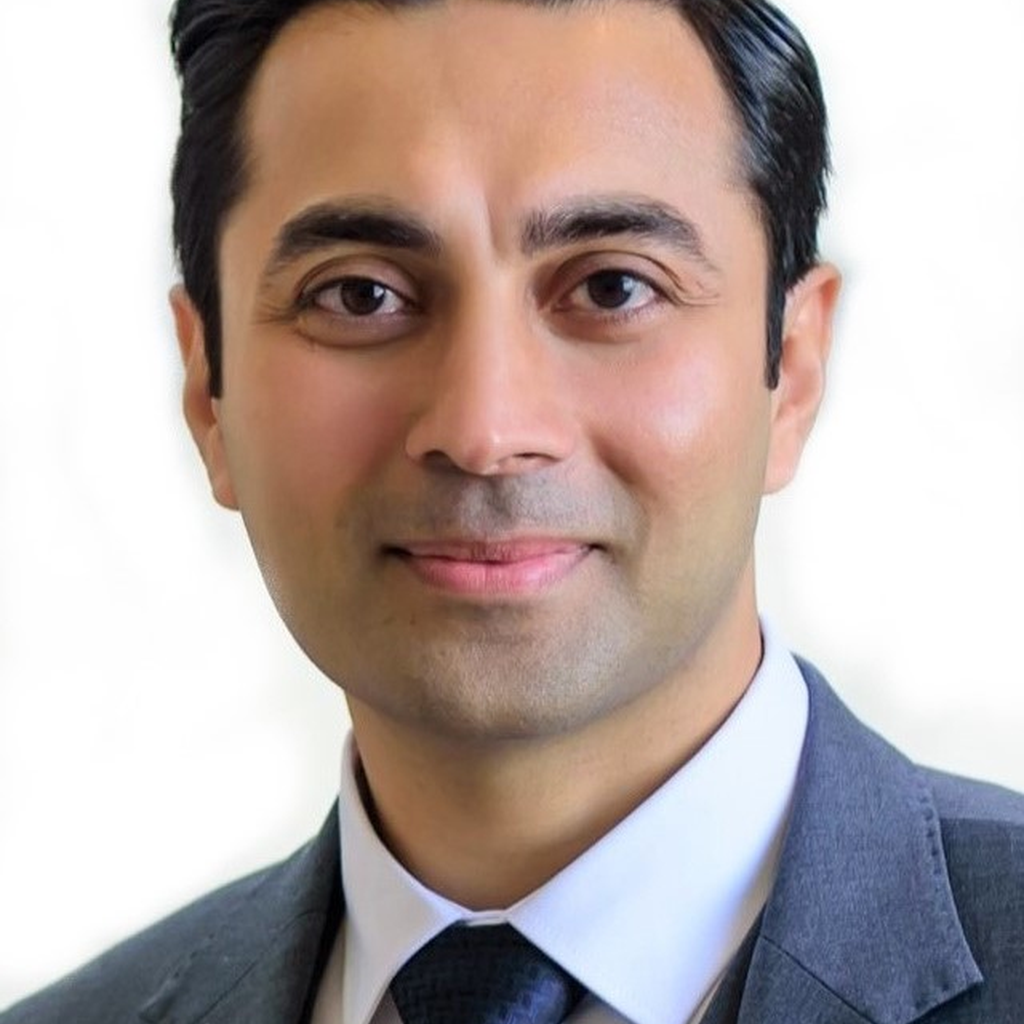
Muhammad Shafique

Muhammad Shafique

Joined March 3, 2025

Karma 0

Overview
Last submissions
Datasets
Workspaces
Papers
Last comments
Last topics
Organizations

Q-MALDetect: Quantum Image-Based Malware Detection and Adversarial Robustness Analysis

Walid El Maouaki, Mohammad Izen, Nouhaila Innan +2 more

Quantum machine-learning (QML) models are increasingly considered for security applications, yet their adversarial robustness in malware analysis remains insufficiently understood. This paper presents Q-MALDetect, a hybrid convolutional and variational-quantum detector for byte-image representations of x86-64 Executable and Linkable Format (ELF) binaries, and evaluates it under feature-space and a range of Grad-CAM-guided, executable-aware evasion attacks. The model achieves 97.2% training accuracy, but its robustness deteriorates as attack strength increases, with the strongest evaluated feature-space attack reaching a 78.7% attack success rate (ASR). Among executable-aware attacks, Grad-CAM-guided no-operation (NOP) insertion produces the highest conditional ASR of 32.9%. Dynamic adversarial training is the most effective evaluated defense, reducing feature-space ASR to as low as 5.0%, executable-aware ASR to 7.7%, and the sequential-attack ASR to 34.0%. In contrast, convolutional-autoencoder preprocessing increases executable-aware ASR to 39.7%, coinciding with a rise in Grad-CAM attribution mass within the mutable .text region from 35.2% to 45.7%. Ablation results reveal no monotonic relationship between qubit count and robustness, while the encoding interface modifies the learned attack surface without neutralizing the strongest attack. These findings demonstrate that the effectiveness of attacks and defenses depends strongly on the perturbation constraints and evaluation conditions. Reliable deployment of QML malware detectors therefore requires assessment against both feature-space and executable-aware attacks rather than reliance on clean accuracy or generic denoising alone.

cs.CRCross-listedarXiv:2610.26240•Oct 20, 2026

ConQUESTA: Topology-Aware Post-Training Structural Pruning of Quantum Neural Networks

Saim Rehman, Muhammad Shafique

Deploying quantum neural networks (QNNs) on sparse hardware requires preserving task accuracy while reducing compiler-induced two-qubit gates, SWAPs, and depth. We present ConQUESTA (\underline{C}onstrained \underline{Qu}antum \underline{E}ntangler \underline{S}election with \underline{T}opology \underline{A}wareness), a post training pruning framework that combines task saliency with compiler cost, screens candidate entanglers, and searches complete pruning masks under an explicit accuracy constraint. Unlike one-shot ranking, each mask is transpiled as a whole across multiple coupling topologies. Across 4-, 6-, and 8-qubit QNNs and eight model seeds at 55% pruning, ConQUESTA achieves mean resource reductions of 61.6% on Breast Cancer, 72.0% on Digits01, and 82.2% on Iris, exceeding the strongest matched simple baseline by 3.5, 1.7, and 8.9 percentage points, respectively. Fixed-mask recovery raises feasibility from 16/24 to 22/24 runs. In a fixed-k=4 scaling study on a scaling probe of 4 to 12-qubits, the raw mask space grew from 495 to 12.1M while the evaluated masks increase only from 189 to 305. Resource-weight changes alter depth/routing priorities with at most a 0.44-point mean validation shift.

quant-pharXiv:2610.23415•Oct 19, 2026•0 citations

QBFF: Deep Quantum Bottleneck for Automatic Speaker Verification Anti-Spoofing

Anton Firc, Nouhaila Innan, Vojtěch Staněk +6 more

A central goal of quantum machine learning is to identify applications in which small quantum circuits can improve task performance while remaining executable on real hardware. We investigate deepfake (synthetic) speech detection, a largely unexplored application in this area, where reliable confidence scores are as important as discrimination performance because deployment decisions are made at fixed thresholds and overconfident errors can be costly. We introduce QBFF, which routes a compressed speech representation through a small 8-qubit variational circuit (VQC) used as a drop-in bottleneck, with a matched classical bottleneck as the control. The quantum circuit yields better-calibrated confidence in most matched comparisons, including out-of-distribution evaluation, though the downstream deployment-cost benefit is model-dependent. We then run the same circuit on a real IBM quantum processor. To our knowledge, this is the first anti-spoofing pipeline to run on a QPU; hardware execution demonstrates feasibility, with lower subset EER and $C_{llr}$ but higher mean actDCF than the matched classical reference. Together, these results show that hardware-executable quantum bottlenecks can improve score reliability, with gains that vary by evaluation setting.

quant-pharXiv:2610.16390•Oct 13, 2026•0 citations

QIAP: A Quantum-Inspired Authentication Protocol with BB84-Based Channel Monitoring

Owais Ishtiaq Siddiqui, Nouhaila Innan, Hira Zaheer +1 more

Authentication in quantum-aware communication settings requires mechanisms that verify user legitimacy while also assessing whether the communication channel exhibits excessive disturbance. This paper presents QIAP, a stateful hybrid framework that combines classical commitment-based challenge-response authentication with BB84-based quantum-channel monitoring. QIAP uses a dual-branch verification structure inspired by rectilinear and diagonal basis selection. In the rectilinear branch, the prover opens a hash-based commitment and the verifier checks consistency with the registered round token. In the diagonal branch, the prover returns an HMAC tag bound to the verifier nonce, round identifier, and submitted commitment without disclosing the round-specific sub-secret. Under the stated hash, HMAC, freshness, secure-registration, protected-storage, and high-entropy-secret assumptions, QIAP provides computational resistance to the modeled wrong-secret and replay attempts and protects the long-term master secret from direct recovery. After successful authentication, the BB84 module estimates the quantum bit error rate (QBER) and aborts the session when the measured value reaches or exceeds the configured threshold. In the reported simulation, no successful authentication was observed among 1,000 tested wrong-secret attempts per branch. The baseline and full intercept-resend conditions produced mean QBER values of approximately 0.02 and 0.25, respectively. The classical authentication stage required approximately 0.6 ms, and the implemented authentication messages required approximately 113 bytes per round. These results indicate that QIAP can provide a lightweight hybrid framework for combining secret-based identity verification with QBER-based channel-disturbance assessment under the stated threat model.

quant-pharXiv:2610.16124•Oct 13, 2026•0 citations

QTestBench: A Test Framework for Evaluating LLM-Generated Quantum Code

Meriem Terki, Nouhaila Innan, Minghao Shao +3 more

Large language models (LLMs) have shown strong results in classical code generation and are increasingly used to write the unit tests that safeguard that code. Whether they can do the same for quantum software is less clear, because quantum programs are probabilistic, depend on numerical tolerances, and are judged by domain-specific checkers, so a well-formed test can still disagree with the benchmark's verdict. Existing quantum benchmarks measure whether a model produces a correct solution, but not whether its tests can distinguish correct implementations from faulty ones. We introduce QTestBench, a framework that evaluates LLM-generated quantum test suites against independent benchmark checkers, never treating the tests themselves as ground truth. For each task, QTestBench prompts models to produce syntactic, semantic, and behavioral tests, injects candidate solutions at runtime, and compares each test verdict with the checker's label under three validation cohorts, each answering a distinct diagnostic question. We benchmark five LLMs on eight PennyLane QHack challenges and ten Qiskit HumanEval tasks. Generated suites almost always execute, but discrimination lags behind: the best generator reaches a test quality of 0.71 on QHack and 0.34 on Qiskit HumanEval, so executability alone overstates test quality. Oracle-verified synthetic mutants stabilize bug-detection estimates when natural faulty solutions are scarce, as on three of ten Qiskit tasks that yield none. QTestBench offers a reproducible, cross-framework benchmark for the trustworthiness of LLM-generated quantum tests.

cs.LGCross-listedarXiv:2610.13811•Oct 12, 2026•0 citations

Q-PhotoMarket: A Design Space Exploration Framework for Photonic Hybrid Quantum Neural Networks in Financial Market Prediction

Alberto Marchisio, Hanzalah Mohamed Siraj, Muhammad Kashif +2 more

Photonic quantum computing has recently emerged as a promising platform for hybrid quantum machine learning due to its native realization of linear-optical circuits and the computational complexity of boson sampling. However, despite growing interest in quantum methods for finance, the influence of photonic circuit design choices on predictive performance remains largely unexplored. Existing studies typically evaluate a single architecture, leaving the broader photonic design space unexamined. In this work, we present Q-PhotoMarket, a systematic design space exploration (DSE) framework for photonic hybrid quantum neural networks (HQNNs) applied to financial market prediction. We explore over 5,000 valid photonic configurations spanning input photon states, circuit architectures, entangling models, and measurement strategies across their compatible computation spaces, for U.S., Indian, and cryptocurrency markets. To improve search efficiency, the exhaustive exploration is complemented with Bayesian optimization. We further incorporate threshold calibration and prediction-collapse diagnostics to enable reliable evaluation under increasingly imbalanced return thresholds. Experimental results show that systematic exploration of more than 5,000 photonic HQNN configurations reveals consistent architectural patterns across financial markets, identifies robust high-performing designs, and demonstrates competitive performance relative to classical machine learning baselines.

quant-pharXiv:2610.09641•Oct 8, 2026•0 citations

QuantumChain: Blockchain-Backed Quantum Federated Learning for Financial Fraud Detection

Epameinondas Douros, Konstantinos Dalampekis, Nouhaila Innan +2 more

Financial fraud detection is challenged by decentralized data, severe class imbalance, and privacy constraints. This paper presents QuantumChain, a secure Quantum Federated Learning (QFL) framework that combines hybrid quantum-classical neural networks, encrypted federated aggregation, blockchain-based auditability, and quantum-secure communication. Each client trains a local hybrid model in which a variational quantum circuit is embedded between classical neural layers, while model updates are protected through homomorphic encryption, threshold secret sharing, and QKD-based keying. A permissioned blockchain records aggregation events and supports reputation-weighted trust among participants. We evaluate QuantumChain on financial transaction data using a compact, size-matched classical baseline to isolate the effect of the quantum layer. Results show that the HQNN achieves comparable accuracy while improving fraud-class recall in most settings, reaching 94.6% recall compared with 93.2% for the classical model. The Deep QLayer improves performance in full-data settings, suggesting that added circuit depth helps recover representational capacity when the shallow circuit becomes limited. Mixed-state simulations further show that the recall trend persists under non-ideal quantum evolution. In federated deployment with 10 heterogeneous clients, global accuracy increases from 97.7% to 98.8% over five rounds before stabilizing. These results show that QuantumChain can integrate depth-aware hybrid quantum models into a secure federated fraud-detection pipeline while maintaining stable global convergence.

quant-pharXiv:2607.21449•Jul 24, 2026•0 citations

QSTAR: Quantum Selective Transfer with Adaptive Routing

Saim Rehman, Nouhaila Innan, Muhammad Shafique

Quantum transfer learning (QTL) is often evaluated by replacing a classical classifier with a fixed variational quantum head, but this hides a key question: when is the quantum branch actually useful? We propose QSTAR: Quantum Selective Transfer with Adaptive Routing, a selective QTL framework that keeps high-confidence classical predictions and routes only low-confidence samples to a fallback branch. Using a frozen ResNet18 backbone on Fashion-MNIST, we compare manually designed QTL heads, KetGPT-designed quantum heads, and parameter-matched classical baselines under a common data split and optimization schedule. Standard QTL heads reach at most 57.0% accuracy, while the strongest KetGPT head in the main filtered sweep reaches 78.5% accuracy and 0.785 F1-score. Although the strongest fixed classical head remains higher at 81.6%, selective routing gives the quantum branch a clearer role. On low-confidence samples, KetGPT #180 improves accuracy over a parameter-matched MLP fallback by 6.82, 4.31, and 3.03 percentage points at thresholds of 0.70, 0.80, and 0.90. At the full-system level, Adaptive KetGPT-QTL reaches 80.9% accuracy and 0.807 F1-score, outperforming the adaptive classical baseline. A separate compact-circuit ablation identifies KetGPT #160 as a stronger fixed-head candidate, reaching 81.9% accuracy with only 10 quantum parameters and 9 gates. These results suggest that architecture-searched quantum heads are most useful as targeted fallback branches for uncertain inputs rather than uniform replacements for classical classifiers.

quant-pharXiv:2607.21411•Jul 24, 2026•0 citations

PN-QNN: Harnessing Physical Noise as a Native Regularizer in Photonic Hybrid Quantum Neural Networks

Farah Elnakhal, Alberto Marchisio, Nouhaila Innan +2 more

Physical noise in near-term quantum hardware is usually treated as a nuisance to suppress. We ask whether it can instead act as a hardware-native regularizer for photonic hybrid quantum-classical neural networks (PHQCNNs), analogous to noise-injection regularization in classical deep learning. Using Quandela's Perceval simulator and the MerLin framework, we build PHQCNNs for Iris, Digits, and MNIST and inject Perceval's seven-parameter physical noise model directly into training. A genetic algorithm searches the six continuous noise dimensions and 1 boolean parameter to find, per dataset, the configuration maximizing validation accuracy, compared against a noiseless baseline across five seeds. GA-tuned noise yields modest accuracy gains on Iris (+0.82pp) and Digits (+1.45pp), but a clear degradation on MNIST (-1.21pp). Per-parameter sweeps show that no individual noise parameter is consistently beneficial, motivating the joint search, while a second-order loss expansion shows that physical noise induces a Tikhonov-like regularization term whose effect is dataset-dependent. Physical photonic noise can thus act as a free regularizer, but not universally.

quant-pharXiv:2607.20045•Jul 23, 2026•0 citations

VQCSim: When Does Compile-Once Statevector Simulation Beat Generic Quantum Frameworks?

Anton Firc, Martin Perešíni, Vojtěch Mrázek +7 more

Hybrid quantum-classical machine learning workflows repeatedly evaluate many small parametrized circuits during training and model exploration. In this regime, framework dispatch and orchestration overhead often dominate runtime. Prior simulators accelerate execution but leave open the question of when compile-once specialization is the right choice for static variational circuits. We answer this question with VQCSim, a compile-once, PyTorch-native statevector execution path with native autograd. In a systematic MQT Bench study, VQCSim compiles all tested static circuits and provides 87.7% end-to-end semantic validation. Across a five-GPU evaluation set, VQCSim delivers pooled median speedups of 4.49x for native inference and 26.78x for native training, while retaining a 3.31x advantage under matched finite-difference training. Ablation identifies native autograd as the dominant source of acceleration (27.6x), with compile-once caching and batch vectorization contributing additional gains. The speedup trades higher GPU memory (VQCSim is memory-limited at the high end) for lower runtime. We derive a hardware-aware regime map and release vqcsim-oracle, an open-source backend selector with 91.1%-97.7% top-1 agreement (including cross-GPU transfers), enabling automatic simulator selection in QML design loops.
quant-pharXiv:2607.11985•Jul 14, 2026•1 citation
Quantum machine-learning (QML) models are increasingly considered for security applications, yet their adversarial robustness in malware analysis remains insufficiently understood. This paper presents Q-MALDetect, a hybrid convolutional and variational-quantum detector for byte-image representations of x86-64 Executable and Linkable Format (ELF) binaries, and evaluates it under feature-space and a range of Grad-CAM-guided, executable-aware evasion attacks. The model achieves 97.2% training accuracy, but its robustness deteriorates as attack strength increases, with the strongest evaluated feature-space attack reaching a 78.7% attack success rate (ASR). Among executable-aware attacks, Grad-CAM-guided no-operation (NOP) insertion produces the highest conditional ASR of 32.9%. Dynamic adversarial training is the most effective evaluated defense, reducing feature-space ASR to as low as 5.0%, executable-aware ASR to 7.7%, and the sequential-attack ASR to 34.0%. In contrast, convolutional-autoencoder preprocessing increases executable-aware ASR to 39.7%, coinciding with a rise in Grad-CAM attribution mass within the mutable .text region from 35.2% to 45.7%. Ablation results reveal no monotonic relationship between qubit count and robustness, while the encoding interface modifies the learned attack surface without neutralizing the strongest attack. These findings demonstrate that the effectiveness of attacks and defenses depends strongly on the perturbation constraints and evaluation conditions. Reliable deployment of QML malware detectors therefore requires assessment against both feature-space and executable-aware attacks rather than reliance on clean accuracy or generic denoising alone.
Deploying quantum neural networks (QNNs) on sparse hardware requires preserving task accuracy while reducing compiler-induced two-qubit gates, SWAPs, and depth. We present ConQUESTA (\underline{C}onstrained \underline{Qu}antum \underline{E}ntangler \underline{S}election with \underline{T}opology \underline{A}wareness), a post training pruning framework that combines task saliency with compiler cost, screens candidate entanglers, and searches complete pruning masks under an explicit accuracy constraint. Unlike one-shot ranking, each mask is transpiled as a whole across multiple coupling topologies. Across 4-, 6-, and 8-qubit QNNs and eight model seeds at 55% pruning, ConQUESTA achieves mean resource reductions of 61.6% on Breast Cancer, 72.0% on Digits01, and 82.2% on Iris, exceeding the strongest matched simple baseline by 3.5, 1.7, and 8.9 percentage points, respectively. Fixed-mask recovery raises feasibility from 16/24 to 22/24 runs. In a fixed-k=4 scaling study on a scaling probe of 4 to 12-qubits, the raw mask space grew from 495 to 12.1M while the evaluated masks increase only from 189 to 305. Resource-weight changes alter depth/routing priorities with at most a 0.44-point mean validation shift.
A central goal of quantum machine learning is to identify applications in which small quantum circuits can improve task performance while remaining executable on real hardware. We investigate deepfake (synthetic) speech detection, a largely unexplored application in this area, where reliable confidence scores are as important as discrimination performance because deployment decisions are made at fixed thresholds and overconfident errors can be costly. We introduce QBFF, which routes a compressed speech representation through a small 8-qubit variational circuit (VQC) used as a drop-in bottleneck, with a matched classical bottleneck as the control. The quantum circuit yields better-calibrated confidence in most matched comparisons, including out-of-distribution evaluation, though the downstream deployment-cost benefit is model-dependent. We then run the same circuit on a real IBM quantum processor. To our knowledge, this is the first anti-spoofing pipeline to run on a QPU; hardware execution demonstrates feasibility, with lower subset EER and CllrC_{llr}Cllr​ but higher mean actDCF than the matched classical reference. Together, these results show that hardware-executable quantum bottlenecks can improve score reliability, with gains that vary by evaluation setting.
Authentication in quantum-aware communication settings requires mechanisms that verify user legitimacy while also assessing whether the communication channel exhibits excessive disturbance. This paper presents QIAP, a stateful hybrid framework that combines classical commitment-based challenge-response authentication with BB84-based quantum-channel monitoring. QIAP uses a dual-branch verification structure inspired by rectilinear and diagonal basis selection. In the rectilinear branch, the prover opens a hash-based commitment and the verifier checks consistency with the registered round token. In the diagonal branch, the prover returns an HMAC tag bound to the verifier nonce, round identifier, and submitted commitment without disclosing the round-specific sub-secret. Under the stated hash, HMAC, freshness, secure-registration, protected-storage, and high-entropy-secret assumptions, QIAP provides computational resistance to the modeled wrong-secret and replay attempts and protects the long-term master secret from direct recovery. After successful authentication, the BB84 module estimates the quantum bit error rate (QBER) and aborts the session when the measured value reaches or exceeds the configured threshold. In the reported simulation, no successful authentication was observed among 1,000 tested wrong-secret attempts per branch. The baseline and full intercept-resend conditions produced mean QBER values of approximately 0.02 and 0.25, respectively. The classical authentication stage required approximately 0.6 ms, and the implemented authentication messages required approximately 113 bytes per round. These results indicate that QIAP can provide a lightweight hybrid framework for combining secret-based identity verification with QBER-based channel-disturbance assessment under the stated threat model.
Large language models (LLMs) have shown strong results in classical code generation and are increasingly used to write the unit tests that safeguard that code. Whether they can do the same for quantum software is less clear, because quantum programs are probabilistic, depend on numerical tolerances, and are judged by domain-specific checkers, so a well-formed test can still disagree with the benchmark's verdict. Existing quantum benchmarks measure whether a model produces a correct solution, but not whether its tests can distinguish correct implementations from faulty ones. We introduce QTestBench, a framework that evaluates LLM-generated quantum test suites against independent benchmark checkers, never treating the tests themselves as ground truth. For each task, QTestBench prompts models to produce syntactic, semantic, and behavioral tests, injects candidate solutions at runtime, and compares each test verdict with the checker's label under three validation cohorts, each answering a distinct diagnostic question. We benchmark five LLMs on eight PennyLane QHack challenges and ten Qiskit HumanEval tasks. Generated suites almost always execute, but discrimination lags behind: the best generator reaches a test quality of 0.71 on QHack and 0.34 on Qiskit HumanEval, so executability alone overstates test quality. Oracle-verified synthetic mutants stabilize bug-detection estimates when natural faulty solutions are scarce, as on three of ten Qiskit tasks that yield none. QTestBench offers a reproducible, cross-framework benchmark for the trustworthiness of LLM-generated quantum tests.
Photonic quantum computing has recently emerged as a promising platform for hybrid quantum machine learning due to its native realization of linear-optical circuits and the computational complexity of boson sampling. However, despite growing interest in quantum methods for finance, the influence of photonic circuit design choices on predictive performance remains largely unexplored. Existing studies typically evaluate a single architecture, leaving the broader photonic design space unexamined. In this work, we present Q-PhotoMarket, a systematic design space exploration (DSE) framework for photonic hybrid quantum neural networks (HQNNs) applied to financial market prediction. We explore over 5,000 valid photonic configurations spanning input photon states, circuit architectures, entangling models, and measurement strategies across their compatible computation spaces, for U.S., Indian, and cryptocurrency markets. To improve search efficiency, the exhaustive exploration is complemented with Bayesian optimization. We further incorporate threshold calibration and prediction-collapse diagnostics to enable reliable evaluation under increasingly imbalanced return thresholds. Experimental results show that systematic exploration of more than 5,000 photonic HQNN configurations reveals consistent architectural patterns across financial markets, identifies robust high-performing designs, and demonstrates competitive performance relative to classical machine learning baselines.
Financial fraud detection is challenged by decentralized data, severe class imbalance, and privacy constraints. This paper presents QuantumChain, a secure Quantum Federated Learning (QFL) framework that combines hybrid quantum-classical neural networks, encrypted federated aggregation, blockchain-based auditability, and quantum-secure communication. Each client trains a local hybrid model in which a variational quantum circuit is embedded between classical neural layers, while model updates are protected through homomorphic encryption, threshold secret sharing, and QKD-based keying. A permissioned blockchain records aggregation events and supports reputation-weighted trust among participants. We evaluate QuantumChain on financial transaction data using a compact, size-matched classical baseline to isolate the effect of the quantum layer. Results show that the HQNN achieves comparable accuracy while improving fraud-class recall in most settings, reaching 94.6% recall compared with 93.2% for the classical model. The Deep QLayer improves performance in full-data settings, suggesting that added circuit depth helps recover representational capacity when the shallow circuit becomes limited. Mixed-state simulations further show that the recall trend persists under non-ideal quantum evolution. In federated deployment with 10 heterogeneous clients, global accuracy increases from 97.7% to 98.8% over five rounds before stabilizing. These results show that QuantumChain can integrate depth-aware hybrid quantum models into a secure federated fraud-detection pipeline while maintaining stable global convergence.
Quantum transfer learning (QTL) is often evaluated by replacing a classical classifier with a fixed variational quantum head, but this hides a key question: when is the quantum branch actually useful? We propose QSTAR: Quantum Selective Transfer with Adaptive Routing, a selective QTL framework that keeps high-confidence classical predictions and routes only low-confidence samples to a fallback branch. Using a frozen ResNet18 backbone on Fashion-MNIST, we compare manually designed QTL heads, KetGPT-designed quantum heads, and parameter-matched classical baselines under a common data split and optimization schedule. Standard QTL heads reach at most 57.0% accuracy, while the strongest KetGPT head in the main filtered sweep reaches 78.5% accuracy and 0.785 F1-score. Although the strongest fixed classical head remains higher at 81.6%, selective routing gives the quantum branch a clearer role. On low-confidence samples, KetGPT #180 improves accuracy over a parameter-matched MLP fallback by 6.82, 4.31, and 3.03 percentage points at thresholds of 0.70, 0.80, and 0.90. At the full-system level, Adaptive KetGPT-QTL reaches 80.9% accuracy and 0.807 F1-score, outperforming the adaptive classical baseline. A separate compact-circuit ablation identifies KetGPT #160 as a stronger fixed-head candidate, reaching 81.9% accuracy with only 10 quantum parameters and 9 gates. These results suggest that architecture-searched quantum heads are most useful as targeted fallback branches for uncertain inputs rather than uniform replacements for classical classifiers.
Physical noise in near-term quantum hardware is usually treated as a nuisance to suppress. We ask whether it can instead act as a hardware-native regularizer for photonic hybrid quantum-classical neural networks (PHQCNNs), analogous to noise-injection regularization in classical deep learning. Using Quandela's Perceval simulator and the MerLin framework, we build PHQCNNs for Iris, Digits, and MNIST and inject Perceval's seven-parameter physical noise model directly into training. A genetic algorithm searches the six continuous noise dimensions and 1 boolean parameter to find, per dataset, the configuration maximizing validation accuracy, compared against a noiseless baseline across five seeds. GA-tuned noise yields modest accuracy gains on Iris (+0.82pp) and Digits (+1.45pp), but a clear degradation on MNIST (-1.21pp). Per-parameter sweeps show that no individual noise parameter is consistently beneficial, motivating the joint search, while a second-order loss expansion shows that physical noise induces a Tikhonov-like regularization term whose effect is dataset-dependent. Physical photonic noise can thus act as a free regularizer, but not universally.
Hybrid quantum-classical machine learning workflows repeatedly evaluate many small parametrized circuits during training and model exploration. In this regime, framework dispatch and orchestration overhead often dominate runtime. Prior simulators accelerate execution but leave open the question of when compile-once specialization is the right choice for static variational circuits. We answer this question with VQCSim, a compile-once, PyTorch-native statevector execution path with native autograd. In a systematic MQT Bench study, VQCSim compiles all tested static circuits and provides 87.7% end-to-end semantic validation. Across a five-GPU evaluation set, VQCSim delivers pooled median speedups of 4.49x for native inference and 26.78x for native training, while retaining a 3.31x advantage under matched finite-difference training. Ablation identifies native autograd as the dominant source of acceleration (27.6x), with compile-once caching and batch vectorization contributing additional gains. The speedup trades higher GPU memory (VQCSim is memory-limited at the high end) for lower runtime. We derive a hardware-aware regime map and release vqcsim-oracle, an open-source backend selector with 91.1%-97.7% top-1 agreement (including cross-GPU transfers), enabling automatic simulator selection in QML design loops.